Showing posts with label book review. Show all posts

2.11.2007

CLOSE RANGE, by Annie Proulx

Well, that's it. CLOSE RANGE firmly establishes Annie Proulx as one of my favorite authors. Why did this take three books to confirm? Because I mostly liked The Shipping News and I really liked Accordian Crimes, and I wasn't sure how all that averaged out, even when one figured in how much I liked "Brokeback Mountain" (a lot--"Brokeback Mountain" is one of the short stories included in CLOSE RANGE. I read "Brokeback" last summer, and only just now sat down to the rest of the stories). CLOSE RANGE brings it all together, and yes, ranks Proulx high on my scale of favorites.

The short stories in CLOSE RANGE all focus on the state of Wyoming, and are told with a sense of eerie, dark humor that is fascinating--without being perverse or excessive. Her writing is beautiful, seemingly effortless, and some of her simplest sentences stunned me into reading them aloud, including this one, from "The Bunchgrass Edge of the World":
Old Red in his pantry wished for deafness when the bedsprings sang above.
It's a beautiful sentence, even out of context. Some of my favorite stories include both "Brokeback" and "Bunchgrass," but also "The Blood Bay" (which made me laugh, and read the whole thing aloud to Mitch) and "Pair a Spurs."

There's something of Flannery O'Connor in the way Proulx tells a story--though the West is to Proulx what the South is to O'Connor--as well as something fluid and seemless in the way she writes. Proulx is brilliant, quite brilliant, and I can't wait to read another of her novels.

RATING: 5

2.10.2007

Book Review: JACK MAGGS, by Peter Carey

JACK MAGGS is the sort of book that gives me goosebumps. Something about the characters, about the depth to which Carey tests them, just gets to me, particularly as Carey exposes all their vulnerabilities but also, exposes their strengths. The characters of JACK MAGGS (most notably the title character) are shown to an eerie depth, and it is this that lends the book its drive--it plows onward, relentlessly, and I do mean this in a good way.

A brief summary: Jack Maggs is an escaped convict in the 1830s. He has been exiled to Australia but has, for reasons unknown to everyone but himself, he returns to London with a specific design. As he pursues this, several other characters are drawn in, and the plot, as they say, thickens.

RATING: 4

2.06.2007

Book Review: THE AUTOGRAPH MAN, by Zadie Smith

To me, it seems like every vaguely successful author is hailed, at some point in their career, as the "voice of a generation"--for an author under thirty, this cliche may be altered to "voice of the next generation."

What that means, I have no idea.

Or, I had no idea until I came across Zadie Smith's THE AUTOGRAPH MAN, which seems to encompass--without being melodramatic, dull or self-indulgent--the very essence, somehow, of the issues my generation deals with. Somehow, Smith does seem to be the "voice of a (next) generation."

I'm really not sure how to flesh that out, but I know I mean it, and in one last attempt to back it up, I'll say this: without referencing iPods and other embarrassingly "relevant" things, Smith burrows right into the weird uncertainty an entire generation can feel when their sole purpose seems to be purchasing and admiring objects, whether these objects be gadgets, lifestyles or (as in the case of celebrities) people.

RATING: 4

2.03.2007

Book Review: THE IDIOT, by Fyodor Dostoevsky

How does one review THE IDIOT? I have no idea. I can tell you that I enjoyed it, very much, and I can tell you roughly why, but when I put the book down--after enjoying it, very much, for quite a long time--I was baffled to realize that I have only the slightest of ideas as to what THE IDIOT is actually about.

Prince Myshkin, our hero, was a wonderful character, surrounded by several other fascinating and complex characters, all of whom were prone to lengthy conversations on various subjects in various sitting rooms, most of which I was able to follow well enough. I think where I fell off was in the subtle, devious relationships between the characters--who seemed constantly to be thinking one thing and saying another, with all sorts of strange motives that I never was able to unravel.

This left me feeling a bit like the Prince must have felt in attempting to have any sort of interaction with the other characters, particularly when one factors in the irony that the Prince, though viewed as an idiot by nearly everyone at one time or another, is easily the cleverest and most good-hearted man of any to make an appearance in the book--he seems at times to suffer only from his own niavete.

Even with all the intrigue and (on my part) confusion, I loved THE IDIOT for these two reasons:

1) The Prince. The back of the book makes the bold assertion that Myshkin is "Christ-like," and I enjoyed teasing out the metaphor as I read--I think it holds, loosely, but I won't go into it much. I'm sure there have been all manner of dissertations and literary articles written on the subject, and I'm just not equal to that, so I'll sum it up with "I think it holds, loosely." On top of that, I liked the Prince an awful lot for who he was and how he responded to various pressures (for the most part). Also, his inclination to suddenly say something brilliant was quite endearing, as was his unpredictability in speech and action.

2) The stories within the story. I loved this about The Brothers Karamazov as well (most notably "The Grand Inquisitor"): Dostoevsky has a way of imbedding fascinating short stories within the novels, and it's those that were easily my favorite parts of the book. Think Ippolit's dream (within the story of his "explanation"), or Myshkin's tale of the beheading toward the start of the book--these helped to break up the dialogue, while somehow moving the plot along to a different level altogether.

While I loved THE IDIOT, I think The Brothers Karamazov safely remains my favorite of Dostoevsky's novels. Dostoevsky has the uncanny ability to set some of the kindest, most good-hearted characters alongside some of the most devious and down-right evil, and it's this tension that carries THE IDIOT along as such a brilliant speed.

RATING: 4

1.19.2007

Book Review: SHANTARAM, by Gregory David Roberts

When my dad told me that SHANTARAM was the best book he'd read in months, I knew I had to read it, right away. See, my dad reads even more than I do, and "best book in months" is very high praise coming from him, because he can read an awful lot of books in just a few months--for him to call SHANTARAM the best book he'd read in months is roughly the equivelent to a normal person saying it was the best book they'd read this year.

To have an idea of what SHANTARAM is about, you need to know a little about Gregory David Roberts: he was sentenced to nineteen years in an Australian prison for a series of armed robberies; he later escaped from prison and spent ten years on the run in Bombay. What happens in Bombay is more or less what SHANTARAM is about, and the fact that the book is based loosely on the author's life is probably a saving grace, because though SHANTARAM is a novel, not a memoir, the autobiographical aspect of the book lends it some crediblility that serves the story well. Without that credibility, I don't think I'd believe a word Roberts says.

The events of the book are so bizarre, so relentless and brutal, that the things this guy does, and things that are done to him, border on the unbelievable. I mean this in a good way, but if a novelist tried to convince me that all of that stuff actually happened to a fictional character I'd roll my eyes and laugh. The fact that some of this stuff (and more) verifyably happened to Roberts makes me take the whole book a lot more seriously--and kept me reading with wide eyes.

(I must warn you, though: don't go looking Roberts up until you're a good way into the book, unless you want to know the key points of what happens. You might look up a photo of him, if you like. That's entertaining.)

So what was so fascinating about SHANTARAM? Why, the main character. Lin is one hell of a character, that's for sure, and though I still don't know what to make of him, I like him. Most of the other characters were incredibly strong as well, especially Prabaker, Abdullah, Didier, and Khader Khan. I won't lie, though--I never cared much for Karla.

It did take me awhile to get into Roberts' writing style (he's really into reflections on the nature of love and freedom and so on; also, some of his metaphors took a little getting used to), but by the end of all 900 pages, he'd won me over, not least because he managed to resolve everything so well. I have to admit that, with all the plotlines, sub-plotlines and sub-sub-plotlines, I was skeptical that he'd be able to bring everything together at the end of the book, but he did. The book ended well, and I was glad.

Do I think this book is for everyone? No. Do I think you should read it anyway? Definately. It's a good one. Also, there's a rumor that Johnny Depp will be producing the movie version soon, and I sincerely hope that he takes the role of Didier and not the role of Lin. He would be an excellent Didier, but a terrible Lin.

RATING: 4

1.09.2007

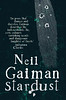
Book Review: STARDUST and CORALINE, both by Neil Gaiman

Somewhere in the acknowledgements of STARDUST, Neil Gaiman thanks a slew of authors (C.S. Lewis included) for showing him that fairy stories can be for adults and not just for children. This is exactly what STARDUST is: a fairy story for adults.

Generally when something is referred to as "for adults" that means either a) that it's boring, or b) that there's sex involved. However, STARDUST is neither boring nor sleazy (though it's not without its romantic moments)--the story moves along rapidly, through the village of Wall and the Land of Faerie, switching from character to character, subplot to subplot, in such a seamless fashion that I was reminded often that authors like Neil Gaiman are why I love reading. The man can tell a story, without a doubt.

RATING: 4

Which brings me to CORALINE.

While CORALINE seemed marketed more explicitly toward kids, it was a whole heck of a lot scarier than STARDUST. The eerie environment and creepy characters, however, merely added to CORALINE's charm, as did the illustrations by Dave McKean (you may or may not recall that Gaiman and McKean teamed up on the movie Mirrormask--which was very cool).

See, Coraline lives in a flat with a door that opens into another flat--the flat where everything is better. The one catch, of course, is that the mother in that flat wants to keep Coraline. Forever.

The conditions on which she wants to keep Coraline, as you might imagine, are not good. The story that unfolds is spooky and utterly absorbing, and the book is short and perfect for times when you're bedridden with the flu (in fact, having a fever when you read this book seems to spice things up).

I loved CORALINE, maybe better than STARDUST, because Coraline was such a fascinating character, and Gaiman let her carry the whole book. A strong character leading the plot along always makes me happy.

RATING: 5

12.29.2006

Book Review: THE CHRONICLES OF NARNIA, by C.S. Lewis

The Lion, The Witch & The Wardrobe
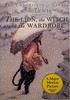
If I were to give out an award for "Most Re-read Series in My Book Collection," it would, without a doubt, go to to The Chronicles of Narnia. Unlike Harry Potter or The Lord of the Rings (which I'm currently re-reading again), Narnia does not demand that you hand over a significant portion of your life in order to read the series start to finish--it does not, in fact, even ask that you read them start to finish, and this is part of the series' appeal. You can pick up one little hundred-page children's book whenever you feel like a dose of Narnian folklore--you can read that one book, and then put it down. You do not have to go on to book two, or four, or seven.

That is what I did just now. After reading a many-paged literary thriller (Possession, by A.S. Byatt), partially set in Victorian England, I was ready for a good, solid, quick dose of swashbuckling adventure--and this is exactly what The Chronicles of Narnia specialize in. Brevity, and swashbuckling.

THE LION, THE WITCH & THE WARDROBE, first in the series (though Book 6, The Magician's Nephew, is a prequel to LION--if you're about chronology, you might read that one first), is the one that everybody knows about and has read, or had read to them, at least once, long ago. It is also the one that the movie (the movie, to be released on Dec. 9--not that I'm counting) is based on, the one with the mean White Witch, and the great lion, Aslan, and giants and quirky professors and fauns and magical wardrobes and little English children running around saying things like "Sharp's the word," and "Jolly good."

Brevity, swashbuckling. Upcoming movie. You really should have read this one already.
----------------

Prince Caspian
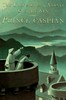
PRINCE CASPIAN, the swashbuckling second book (or fourth, depending on how old your edition is) of The Chronicles of Narnia, features usurping uncles, a rightful king, a fresh breath or two of the Narnian air, all four Pevensie children, and, you guessed it, talking animals. If you're reading this one, you probably already read The Lion, the Witch, and the Wardrobe, so there's no sense in me going on and on about it.

I don't know that I've heard CASPIAN called anybody's favorite chronicle (most people seem to weigh in with The Voyage of the Dawn Treader, which I agree with heartily, though I'm also partial to The Magician's Nephew, and rather intrigued by The Last Battle), but that doesn't mean you should skip it--heavens, no! You should skip not a single Chronicle. PRINCE CASPIAN is chockfull of Narnian battle tactics, plus it's the last time you see all four Pevensie kids being Narnian royalty together.

(Quick: how many times have I said the word "swashbuckling" in regards to The Chronicles of Narnia? I think I'm about to stop, though. I'll come up with some other really good silly word.)
----------------

The Horse & His Boy

Long ago when I actually paid Blogdrive to host my site, they let me have all kinds of fun polls and things, and so I posted a poll asking all five of my readers what Narnia book was their favorite. Of the four that responded (and this includes me voting for both myself and my husband), the results were split down the center between The Voyage of the Dawn Treader and THE HORSE & HIS BOY.

Having never been a big fan of HORSE (Dawn Treader forever! Woo!), this struck me as curious. Ye who voted for THE HORSE & HIS BOY, please come forward and help me out. I want to know.

Which isn't to say that I don't like THE HORSE & HIS BOY. Oh, I do, but it just never made its way into my favorites. In fact, I'd have to say the second half of the book is awesome, but the first half didn't quite measure up. I know this isn't much of a review, but mostly I'm wondering what you, dear 5 readers, have to say.

Ready, set, COMMENT!
-----------------

The Voyage of the Dawn Treader
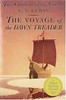
And so we arrive at my favorite Narnian chronicle. I love it for the spirit of high adventure, for the discovery of unknown islands and for the strange and beautiful things dwelling upon those islands; for the transformation of Eustace, and the brief but lovely appearances of Aslan. I love Reepicheep, the valiant Mouse, and the awe-inspiring Last Sea; I love the lilies of the Silver Sea and even the smallest glimpse of Aslan's own country.

However: I do get tired of Lucy's being singled out constantly as "a girl," and therefore being bustled out of harm's way simply because she is "a girl." I like Lucy as a character, but do get tired of the way the other characters treat her. That is my only complaint. Everything else is Lewis as his brilliant, imaginative best.
------------------

The Silver Chair
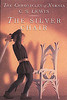
I have to say, THE SILVER CHAIR has grown on me over the years. It never was one of my favorites, given the noticable lack of Pevensies and my particular lack of affection for Jill Pole (though she does come around, as everyone in the Chronicles eventually does), but this time through I found myself absolutely loving the scenery--Aslan's Mountain, especially, and Underland as well. Lewis's description of the first is pure and joyful, if perilous, while his description of the second is eerie and memorable--the darkness and silence stuck with me even after I put the book down. Aslan's character in SILVER CHAIR is slightly more stern, which I liked (the more moods of Aslan shown, the better!), and the Marsh-wiggle is wonderful. I had forgotten just how much there is to love about this book.
------------------

The Magician's Nephew

THE MAGICIAN'S NEPHEW solidly remains one of my favorite Chronicles. The Creation of Narnia! The destruction of Charn! The Evil Empress Jadis! I love how NEPHEW ties together so much of The Lion, The Witch and the Wardrobe, while also remaining an excellent story in its own right. THE MAGICIAN'S NEPHEW introduces some of my very favorite locations--the eerie, failing land of Charn; newborn Narnia; that mysterious Garden; the Wood Between the Worlds--while also showing yet more aspects of Aslan's character. I come back to this one again and again, even sometimes skipping the other six just to reread THE MAGICIAN'S NEPHEW.

RATING: 5

12.22.2006

Book Review: THE WEIGHT OF GLORY, by C.S. Lewis

I've read a lot of C.S. Lewis in my day. In fact, chances are good that I'm reading a C.S. Lewis book right now, regardless of when you happen to come across this post (as I write, I'm just beginning to reread The Magician's Nephew)--chances are, I'm rereading a C.S. Lewis book. They're just that good.

Of all his books, THE WEIGHT OF GLORY remains one of my favorites, particularly the title essay "The Weight of Glory." I actually found a version of this essay online: here is the link. Some of my most remembered quotes come from that essay.

A collection of Lewis's sermons and lectures and essays, the book itself is slim, easy to pick up and put down, and to reread when you feel in need of a little Lewis recharge. That is what I needed this time through though, honestly, I didn't finish it this second time because my copy of Culver's Systematic Theology showed up in the mail while I was right in the middle--THE WEIGHT OF GLORY was put down and never resumed, since Culver is quite a commitment and I'm sure he'll keep me busy for months (if you've not seen it, Systematic Theology is enormous--roughly the size of a small coffee table).

So, I got distracted, from both the book and my point. To sum things up, I love this book. Also, don't skip the introduction--there are some wonderful anecdotes about C.S. Lewis in there. Absolutely charming.

12.16.2006

Book review: AHAB'S WIFE, by Sena Jeter Naslund

The Ahab of AHAB'S WIFE is, of course, Captain Ahab of Moby Dick--a book that I have never read. Though assured that I could appreciate AHAB'S WIFE just fine without reading Moby Dick, I did find that AHAB'S WIFE lacked context without Moby Dick to flesh it out, much like The Hours lacked context without the backdrop of Mrs. Dalloway.

This isn't to say that AHAB'S WIFE doesn't stand alone as a novel--it does--but merely that a book about another book, if one hasn't read the first book before reading the second, seems a little off. I've never cared for the whole "book about an obscure character in a classic book" thing much, because it strikes me as somewhat pretentious, as if the second author is accusing the first of leaving something out of the original story. I understand that this isn't always the case, and that some really imaginative books have come from this technique, but I just tend not to like it. I say, if you're writing a story, write your own story. Come up with something new, don't just give us a "fresh" view of a "classic" story.

(The one exception to this, I think, are reinterpretations of Biblical stories. I really love those, because they make me look at the original story in a whole new way, regardless of how many times I've read and reread the story.)

When it was all said and done, I think I did like AHAB'S WIFE. It was a struggle at times, because, for all its lively moments, the book plods along at about the pace you'd expect from a book about a sea captain's wife--waiting and waiting and writing about stuff. The middle two-hundred pages sucked me right in because things actually happened, but the beginning and end took some muscle to get through. To be honest, I didn't care much for Naslund's writing. It was good, sure, but it wasn't my cup of tea, and it took a long time to get used to, though eventually I did and was able to move on in spite of the overly (self-consciously) deep musings she stuck in all over the place.

So, the only problems I had with AHAB'S WIFE were purely personal preferences. Some people would be totally justified in really liking it, and though I ultimately liked it, I can't say I'd recommend it to you.

RATING: 3

11.27.2006

Book Review: REDWALL, by Brian Jacques

The pace at which REDWALL begins is astonishing. Immediately, the characters are thrown into conflict and by the second chapter, Cluny the Scourge, who is easily one of the scariest bad guys I've encountered in a children's book (save Voldemort), enters, leading his rat troops as a cruel, merciless tyrant. Jacques somehow balances the sweet honesty of Redwall Abbey with the brutality of Cluny's horde, and introduces characters complex enough to keep me (and children, and parents) rapt for the whole of the book.

I loved REDWALL, and the world Jacques presents is brilliant: as simple and as complicated (as purely good and purely evil) as our own. I have the next two books ready and waiting on my shelf, and I'm excited to dive right back into Redwall.

RATING: 5

11.18.2006

Book Review: THE MEMORY KEEPER'S DAUGHTER, by Kim Edwards

The premise of this book is good: "a blizzard forces Dr. David Henry to deliver is own twins. His son, born first is perfectly healthy, but the doctor immediately recognizes that his daughter has Down's syndrome. For motives he tells himself are good, he makes a split-second decision that will haunt all their lives forever. He asks his nurse, Caroline, to take the baby away to an institution." I don't know what I expected, but that seemed initially promising, though it proved to wind itself out in a depressing tale with an obvious moral ("Lying is bad"), where the characters were so sneaky and self-absorbed that they were difficult to empathize with.
There were some interesting points about raising a child that the world views as damaged, as Caroline takes the daughter to another city and raises her as her own--some very telling episodes, as people responded to Caroline and her daughter, were fascinating, but those stood out as the highlights in what was otherwise a relatively bland book.

RATING: 2

11.02.2006

Book Review: HOWARDS END, by E.M. Forster

I picked up HOWARDS END purely because they have an awful lot of Forster at Henderson Books, and so I figured I ought to get on the ball and read some. I did, and was quite pleased--were I to describe HOWARDS END in one word, I might choose "delightful" ("clever" might work, too, but it doesn't sum it up quite as nicely as "delightful" does, so we'll go with "delightful").

What impressed me most about Forster was his ability to tease his characters without belittling them. What do I mean? Well, Tom Robbins, for example, is bad at this. When he wants to provide a little distance from his characters and have a little fun at their expense (say, in a satirical way), he manages to make me hate them. I've had the sense several times, while reading a Robbins novel, that he delibately tries to prevent me from ever empathizing with a character, because every time I get close he throws in some snide comment about the character's motive that completely turns me off--and then I start to get paranoid that he's attempting to sabotage any budding relationship that I might have with the character.

Which is beside the point, really. What I'm getting at is that Forster managed to play up his characters' flaws and quirks in a charming way that enabled me to see them as full, fleshed-out beings, imperfections and all, while still allowing me to like them. I love this. I really love loving characters.

Which is also a bit beside the point. The point is that I really liked HOWARDS END, not least because Forster's commentary on English culture in 1910 was surprisingly relevent to our culture today (there is a passage on Christmas shopping that particularly resonates). It is also a great book to precede the gi-normous heap o' literature that I'm currently reading, which is The Idiot, which so far is awesome. I'm not sure why, but reading the books in sequence (though they're utterly unrelated, as far as I know) seems to work.

RATING: 4

10.29.2006

Book Review: THE COST OF DISCIPLESHIP, by Dietrich Bonhoeffer

If you know anything at all about Dietrich Bonhoeffer, you know that he was a man who lived what he believed. He was also the sort of fellow whose biography far proceeds his written work, so I was disappointed, though not surprised, to find that most of the people I asked had heard of Bonhoeffer (and had, in most cases, seen the documentary Bonhoeffer, which I heartily recommend) but had never read any of his books or letters. This makes me sad, though I must admit that THE COST OF DISCIPLESHIP took me three tries to actually finish (and that Letters and Papers from Prison still sits half-finished on my bookshelf), not because it was slow or boring or too dense--I think it had more to do with the fact that I just wasn't at the right point of my life to get into the book and appreciate it, though the first few chapters on "cheap grace" versus "costly grace" stuck with me for an awfully long time after each failed attempt.
This last attempt was wholly successful, and very rewarding. Bonhoeffer's examination of the Beatitudes, his no-nonsense tone as he examines what it means to be a true disciple of Christ convicted me again and again as I fairly soared through the book. I felt a bit like I was the student and Bonhoeffer my professor, who caught me gazing out the window whenever my mind started to wander and unfailingly reined me back in with a harsh (but painfully true) passage that I needed, right then, to hear.

THE COST OF DISCIPLESHIP does not fool around, and for that I'm quite grateful. Though it might seem a difficult read, the reward is enormous, and Bonhoeffer had my head all full of ideas and clear images of what it means to serve Christ and how I can serve better. Also, as the book goes on the chapters get shorter and shorter, though more intense, which is good for forcing the reader to pause and consider the enormity of whatever Bonhoeffer has just said (because no matter what it is, when he says it, it's enormous). I rate DISCIPLESHIP a big fat 5.

RATING: 5

10.20.2006

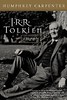
Book Review: J.R.R. TOLKIEN: A BIOGRAPHY, by Humphery Carpenter

There's not really anybody I'd rather read a biography of than J.R.R. Tolkien. I'm not sure what this says about me, but there you have it. There's something about the idea of a mild-mannered Oxford don writing the epic adventures and complex world of The Lord of the Rings that has always intrigued me, and this paradox is exactly what Humphery Carpenter explores, respectfully and very well, in his BIOGRAPHY.

The book is admirably thorough, for Carpenter sets up each chapter as a slightly different take on Tolkien's life--in one chapter, we examine photographs of Tolkien for clues to his character. In another, we study his writing habits, his love of language, or a day in his life at Oxford. Or, a day in his wife's life in Oxford. The format itself is fascinating, and for somebody so seemingly difficult to study (outwardly, his life was quite uneventful) Carpenter presented his charge in a such a way that I felt wholly satisfied that all my questions about Tolkien, the writing of the Rings and the Inklings (of course the Inklings) had been answered. In fact, most of them had a chapter unto themselves.

If you read The Silmarillion and liked it, this one is for you.

RATING: 4

10.11.2006

Book Review: SELECTED POEMS, by Conrad Aiken

College sort of killed poetry for me. I knew eventually I'd regain interest, though probably not in the moody contemporary stuff my professors so loved; it took a friend of mine assuring me that Conrad Aiken was the perfect solution to my problem before I began to come around. He said this while hauling a stack of Aiken books up from his basement and proceeding to thumb madly through them in a search for "the perfect poem" to win me over, and though he didn't find that Perfect One, he read me enough to make me purchase my very own copy of SELECTED POEMS and continue the search on my own. I found it in "The Biography of Senlin," specifically II:1, the last stanza of which reads:
Knock on the door,--and you shall have an answer.
Open the heavy walls to set me free,
And blow a horn to call me into the sunlight,--
And startled, then, what a strange thing you shall see!
Nuns, murderers, and drunkards, saints and sinners,
Lover and dancing girl and sage and clown
Will laugh upon you, and you will find me nowhere.
I am a room, a house, a street, a town.
Moody, yes, but gorgeous--I encountered this one over my lunch break at work and was stunned, particularly by the last line. That was the Perfect One, indeed.

And I'll tell you what--the rest of the collection was just as lovely, dark and abysmal, but teeming with beautiful language, so that I remembered, however dimly, that that's what I liked about poetry in the first place: the language.

RATING: 4

---------------

An interesting aside: I think I read somewhere that Joan Aiken, of The Wolves of Willoughby Chase was Conrad Aiken's daughter. Even if she isn't, you should still read her books. You should also read my review of The Wolves of Willoughby Chase.

Joan Aiken: The Wolves of Willoughby Chase (The Little Bird review)

9.25.2006

Book Review: THE TIME QUARTET, by Madeliene L'Engle

Book I: A WRINKLE IN TIME

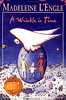
I read A WRINKLE IN TIME for the first time in second grade, and would be willing to bet that WRINKLE was one of the first chapter books that I read, ever, though it was an assignment for school. Did L'Engle figure largely in my developement as a bibliophile? Most certainly, though I forgot about WRINKLE completely until I was nineteen.
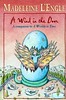
That's when I read Walking on Water for the first time and, upon discovering that L'Engle was one smart lady, picked up her Time Quartet and read the whole thing in roughly a week. This is one of those series that I love, not only for its fantastic stories and huge concepts crammed into child-size characters, but because it is cozy and familiar to me--reading about Meg Murry's attic bedroom reminds me of reading WRINKLE on a wet fall day in our first apartment, snuggled into an afghan and sipping a cup of tea.

It's not just pleasant connotations that bring me back and back to The Time Quartet, however--L'Engle's interpretation of theology is fascinating, and I love that she flat out quotes Scripture in such fitting contexts as strange space creatures singing praises to God. She manages to write a great story without turning faith into an ambiguous allegory, but also without watering the book down to that lamest of lame genres, "Christian Fiction."

Aside from that, though, the story is just plain old good. Meg gets a little obnoxious at times, but L'Engle uses that to the tale's advantage, and counters nicely with the ever-amazing Charles Wallace. To top it off, it is my opinion that the Time books get better and better, with the fourth, Many Waters, being my absolutely favorite. Next up? Book Two: A Wind in the Door.

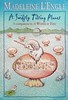
Book II: A WIND IN THE DOOR

This really is the sort of series that every time I reread it, I become convinced that whichever book I'm reading presently, be it Book I, II or otherwise, is my very favorite of the series. This time through, I developed a real fondness for A WIND IN THE DOOR, not least because of all the fascinating information L'Engle introduces through pint-sized characters. Her ability to reveal to the reader both science and theology in new and exciting ways but in a single image or character, astounds me. I respect L'Engle tremendously for this, and found it most apparent in WIND, as Meg, Calvin & Co. explore mitochonria and farolandae with the most excellent cherubim I've come across (in literature) yet.
Book III: A SWIFTLY TILTING PLANET

Of the quartet, PLANET is probably my least favorite book, but only because the other three are so stinkin' rad. I find L'Engle's manipulation of time, and the interlocking, closely knit pattern of it, more and more interesting every time I read the book, but PLANET still seems a little more awkward than the rest of the series--mostly because I miss the Murrys, given that they're only present for maybe a third (half?) of the book, and some of the aspects of the plot seem a little too coincidental for me.
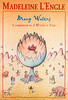
But that's all preference, and I'm sure I'd love PLANET too if it weren't dwarfed by the awesomeness of the other books. Maybe some day PLANET will even end up as my favorite, but for now my very favorite is still:

Book IV: MANY WATERS

Yup. MANY WATERS still won out, which is odd, since Sandy and Dennys remain my least favorite of the Murrys (again, only because the rest of the Murrys are so great). The book starts off pretty awkward, since the twins feel rough and undeveloped and are prone to stating the obvious, such as, "Well, we're the normal ones of the family," and "Well, our parents are scientists," and so on. But I only criticize the beginning because L'Engle wins me over so completely by the second chapter.
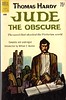
The twins' adventure to me seems the most beautiful of all the books, and the most packed with huge, difficult questions that L'Engle handles with tremendous grace. Add this to an interpretation of the story of Noah and the ark that goes above and beyond anything I could have dreamt, and you have yourself an excellent book. I re-read the entire quartet, really, just to get to this book. MANY WATERS is beautiful in seventeen different ways.

RATING: 5

9.24.2006

Book Review: JUDE THE OBSCURE, by Thomas Hardy

I seem to have hit a rough patch with reading lately. Either I have a bad attitude, or the books I've read recently have fallen short--what else could account for the fact that in the past few weeks I, stubborn as can be, have quit one book in the middle (Durrell's Justine), am considering quitting another (how long can I really spend on Sometimes a Great Notion?) and threatened, several times, to drop JUDE THE OBSCURE when I was over three-quarters of the way done?

Either it's the books, or it's me, and as always I'm inclined to point the finger elsewhere.

After all, JUDE THE OBSCURE takes two of the most obnoxious characters I've encountered in a long time and sets them in a tense little drama about the flaws of Victorian society--with particular emphasis on marriage and religion. Every conversation felt forced and hollow, whether it was about the weather or about the foolishness of certain social conventions, and the characters were, as I said, obnoxious and flat. And overly sensitive.

None of this is helped by the fact that most of the issues Hardy raises with marriage have gone in exactly the direction he foresaw (and a whole lot of good it's done us, too), so that the punch is quite taken out of his assertions, though they no doubt shocked many in his day, as the cover of the books suggests.

Do I sound harsh? I suppose I am, and not least because I loved Hardy's The Return of the Native and therefore hoped that JUDE THE OBSCURE (proclaimed by the cover of the book to be Hardy's masterpiece, as well as "The novel that shocked the Victorian world") would be even better. To my taste, it was quite overdone.

RATING: 2

9.18.2006

Book Review: JUSTINE, by Lawrence Durrell

JUSTINE, though beautifully written, was not quite what I wanted to read just now. I put it down. The first book in Durrell's Alexandria Quartet, JUSTINE is full of brooding characters and dismal studies of love, and sometimes that's just fine with me, but I wasn't up to diving into four whole books of miserable characters, dark, dirty alleyways, poets and whole cloud formations of cigarette smoke. I'm not sure if I'll come back to this one or not. Maybe. You never know. But it just wasn't working for me today.
9.13.2006

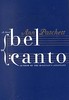
Book Review: BEL CANTO, by Ann Patchett

BEL CANTO is one of those books that I picked up purely for the concept--a dinner party, somewhere in South America, taken hostage by guerillas? The guests' captivity evolving slowly into something beautiful but doomed?

And it's true, the story itself was something to be reckoned with, and Patchett handled it expertly--the details she latched onto and illuminated, the very weight and feel of the book were both devastating and deeply satisfying. BEL CANTO certainly falls in the category of books that end too quickly. I could have gone on reading it for months.

Another big selling point is that BEL CANTO has one of the most beautiful opening scenes I've read in a long time. The first sentence: When the lights went off, the accompanist kissed her. I started on that one in the book store and didn't stop until I was fifteen pages into the story, and I'm not generally caught by that kissy-kissy stuff. It was the very poise of the characters, the sheer density of the scene, the details that I remember more vividly now that I've finished the book (the smell of candles freshly snuffed, the warm close air of the dining room) that made that scene so entrancing and stuck it so firmly in my imagination.

The good news? Patchett keeps that up, that sense of ambience, for the entire book.

RATING: 4

9.04.2006

Book Review: NO MAN IS AN ISLAND, by Thomas Merton

If you're not familiar with Thomas Merton, he was a Trappist monk, living during the first half of the twentieth century. NO MAN IS AN ISLAND is one of many books that he wrote, and a rather obscure one at that: he's predominately known for The Seven Storey Mountain and the printed volumes of his journals, but ISLAND is the only one I've read (so far--I suspect that this is about to change).
Now, when you're a monk in, say, Kentucky, like Merton, you probably have quite a bit of time to reflect on things like God and prayer and mercy and faith (or maybe you don't--I hear that monks work quite a bit in certain traditions, though I don't know about the Trappists), and so I'd bet that your "reflections" are worth more, spiritually, that those of an ex-NBA player who got religion during a midlife/post-retirement crisis and then felt compelled to write a bestseller--though, again, I don't know. But I'd be willing to bet that this is true.

In Merton's case, it's certainly true that his reflections carry a lot of weight, and deserve an awful lot of thought. To illustrate this, I might mention that it took me something like eight months to make it through this book. Eight months, for a girl who tends to plow through novels this length (264-pages) in under a week, depending on how absorbing the plot is--granted, there were weeks when I didn't pick ISLAND up at all, but there were also weeks when I dropped novels in favor of Merton.

See, NO MAN IS AN ISLAND is a series of chapters, each titled as a subject, like "Sentences on Hope," or "Pure Intention," or "Silence", and each chapter is filled with numbered segments of a few paragraphs apiece that examine aspects of the subject. Merton starts out relatively mild, I suppose, but by the end of the book the insights come fast and heavy--for the last fifteen or twenty pages, I could only take it one segment at a time, because the concepts covered were so vast. Some were no more than a prayer, others were terrible and convicting, and all were beautifully, gorgeously written. There is no way that I understood even a fourth of what Merton packed into this small book, but what I did grasp, however vaguely, was liberating. NO MAN IS AN ISLAND is a beautiful book, and not one to be passed over in favor of something easier to digest--just try it, please do.

I close with a little tidbit for you:
Whoever seeks to catch Him and hold Him loses Him. He is like the wind that blows where it pleases. You who love Him must love Him as arriving from where you do not know and as going where you do not know. Your spirit must seek to be as clean and as free as His own Spirit, in order to follow Him wherever He goes. Who are we to call ourselves clean or free, unless He makes us so?
RATING: 5