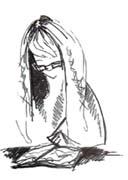
Innocent? I know that some of the love and love-lost songs do sound this way, but I don't think I could call an era of two World Wars, a Depression and, oh, yeah, some bitter Civil Rights struggles "innocent," especially not when I take into consideration songs like Studs Terkel's "Brother, Can You Spare a Dime?", or Billie Holiday's eerie, chokingly sad "Strange Fruit." Having sat down several times to listen to the lyrics of "Strange Fruit" (and it's the sort of song that blindsides you, that makes you sit down and listen to it), I can't help but hear that eeriness, that anger and sense of ugly injustice, in every one of Holiday's songs.
I cannot think of a less innocent song, not even taking Marilyn Manson and Britney and 50Cent into account.
But I suppose that's exactly what "innocent" means in this context--there's no screaming, no reference to cop-killing or suicide or pimpin' or drugs (though Billie Holiday worked as a prostitute when she was young, and eventually died of liver disease due to heavy drinking and drug addiction). Maybe Holiday is an exception, given her tulmutuous personal life, but I doubt it. I think many people are inclined, myself included, to view any time other than our own as somehow better--more pure, more innocent, less corrupt--but in doing so, we forget about the atomic bombs, the wars, the poverty and oppression of over half our country's citizens, based almost solely on the fact that we didn't live through it. All we have is the memories of parents and grandparents, and these old recordings that sing on about love, and say very little about war.
I wonder, when I'm grown old, what popular songs will be in rotation as oldies? Will my kids listen to Jessica Simpson and sigh and say, "Oh, what a simpler time"? I hope not. I very much hope not. But I suspect that this is not far off the mark--that the most popular songs will show up again and again, while the ones that say an embarrassing lot about our era's lack of innocence will be forgotten by all but those who lived through whatever it is that will define us. Probably, on the anniversary of September 11, years down the road, they'll get all misty-eyed and play that god-awful country song about the red, the white and the blue, instead of digging up something more appropriate.
But I'm getting off track. My point is, I don't think jazz from the '30s and '40s is any more or less innocent than our music today--happier, perhaps, more upbeat, but not any more innocent, because to say so is to pass judgement on something that, in many cases, we have never seen. For example: of the people who declared this music evidence of a more innocent time, not one of them was old enough to have seen that "more innocent time." Not one of them could have known.
Strange Fruit
Southern trees bear strange fruit,
Blood on the leaves and blood at the root,
Black bodies swinging in the southern breeze,
Strange fruit hanging from the poplar trees.
Pastoral scene of the gallant south,
The bulging eyes and the twisted mouth,
Scent of magnolias, sweet and fresh,
Then the sudden smell of burning flesh.
Here is fruit for the crows to pluck,
For the rain to gather, for the wind to suck,
For the sun to rot, for the trees to drop,
Here is a strange and bitter crop.


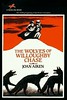 Since we're on the subject of children's books, I present you with Joan Aiken's THE WOLVES OF WILLOUGHBY CHASE (that looks extra dramatic in all caps, no?). This is a fun "orphaned children held captive by evil, conniving governess" story, with some lovely scenes on frozen rivers and in train compartments thrown in. I must say that I loved the wolves most, though I did fall a bit for Simon.
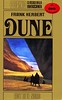 I'm on such a fantasy binge right now, but I can't help it--I need evil empires, odd creatures, magical swords, sacred quests and archery (lots and lots of archery) to be a truly happy girl. To keep up my fantastic spirits, I present you with a review of DUNE: another one of those books that compells all manner of people to stop by your table at the Bagelry and point out what a great book it is that you're reading, and proceed from there to list all the fantasy books that you absolutely have to read before you die.
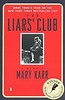 I sort of fell out of the habit of memoirs after analyzing the joy right out of a few good ones in college, but THE LIAR'S CLUB was a book club assignment (and it was a whole heck of a lot better than

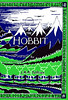 Considering that THE HOBBIT is the prequel to Tolkien's many-paged masterpiece The Lord of the Rings, it's odd that this book makes a little more sense when read after LOTR. I liked Bilbo better this time through--because I knew what came of him later, it was fun to watch his transformation from a silly, proper little hobbit to a brave, wise, elderly one over the course of the series, and this was an improvement, because I didn't care for Bilbo much at all when I first read THE HOBBIT (I know, I know! Don't shun me, please!).
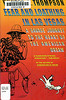 I have started this book maybe three separate times, and not finished it. I've never gotten past the first twenty pages without losing interest, actually, because I can't figure out what the crap's going on, but I won't give up (not yet)--I hear it's a great book, and I also hear, from several figures of literary authority in my life, that I'll like it.
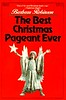 As a kid, this was my most favoritist of all favorite Christmas books--right up there with the Scratch-N-Sniff Cookie Book. THE BEST CHRISTMAS PAGEANT EVER is to holiday literature what A Christmas Story is to film, and I have to admit I was a bit nervous to reread it this year, after so many long years away: what if it was only a silly kid's book--the kind that, when returned to in adulthood, is dull and overly simple, that leaves the now-grown reader wondering what, exactly, was the original appeal?
 Ladies and Gentlemen, I do hope you're all having a lovely Christmas Eve morning, and that the lovliness continues on into this evening and tomorrow, and for the whole rest of the year--and then that you have a lovely year after that.