Doesn't get much cooler than that. For more pictures and all the info, click here.
Doesn't get much cooler than that. For more pictures and all the info, click here.
 So, anybody read Kimmel's other book, A Girl Named Zippy? Cute, sassy memoir about life as an odd-looking child in an Indianan small-town? Well, THE SOLACE OF LEAVING EARLY, Kimmel's second book/first novel, is far better, in my opinion. Though Zippy was fun and well-written, SOLACE is...whew. I need to concentrate for a moment, harness my chi before attempting to review such a gorgeous novel...
 Did you ever want in on a stripper's private thoughts? Nah, me neither. But I've seen the ignorant error of my ways, and now I know better. After reading STRIP CITY, I know much better.
 Oh, it just drives me nuts to read books that I wanted to write. Like this: I wanted to write the dream sequence, the short, illustrated novel about the man in the coma and his waking, and I'm so very irritated that Alex Garland beat me to it. But I'll have to relinquish that particular dream, because, not only did Garland write it first, he wrote a much better novel than I ever could. It's nice to know he lived up to the challenge.
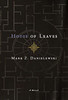 I cannot adequately summarize this book, not without 45 minutes and several diagrams. For a much more to-the-point summary, I refer you to Sean at The Underground Wall, who wrote the review that sent me out, the very next day, to buy HOUSE OF LEAVES (you'll want to read down aways before you hit the House review). He writes a mean summary and, frankly, I do not feel I can do any better--so I won't try.
This demonically brilliant book is impossible to ignore, put down, or persuasively conclude reading. In fact, when you purchase your copy, you may reach a certain page and find me there, reduced in size like Vincent Price, in The Fly, still trapped in the web of it's malicious, beautiful pages.I know, I know. I'm copping out and sending you off to other reviews, and quoting things off the book jacket at you--you may think I'm trying and failing to conceal my inadequacies in the face of such a book, such a challenge, but I'm not. I'm just failing, nevermind the trying.
 OFFSHORE is a very pretty little book about houseboats on the Thames River, but it's pretty in a gray, slightly British way. The characters are quirky and intriguing. A lot happens in not very many pages, which I appreciate, and it happens in an artful, subtle fashion. Fitzgerald's got some skills, that much I'll say. And with them, she won the Booker Prize.
 And so, sometime last spring, we hatched this mad idea to get me on a train to Seattle so I could spend 4 days in Ross' "scene"--his word, not mine. We picked the weekend of a cousin's much-anticipated wedding (wine! relatives! disco! hysteria!) so that Ross could come home for a few days, and then we could ride the train down to Seattle together.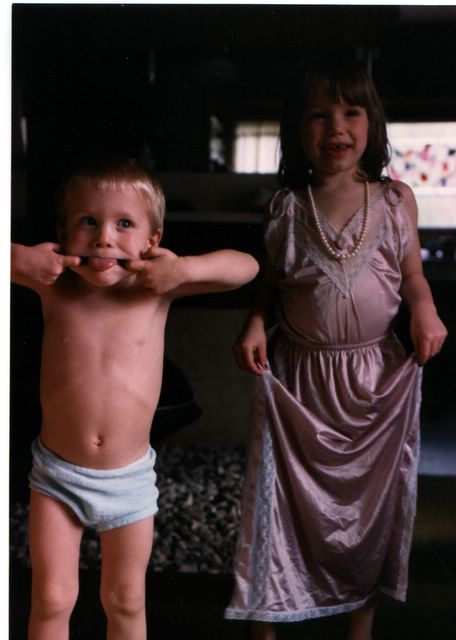
"Life is a game, boy. Life is a game that one plays by the rules."
"Yes, sir. I know it is. I know it."
Game, my ass. Some game. If you get on the side where all the hotshots are, then it's a game, all right--I'll admit that. But if you get on the other side, where there aren't any hotshots, then what's a game about it? Nothing. No game.
--J.D. SALINGER (The Catcher in the Rye)
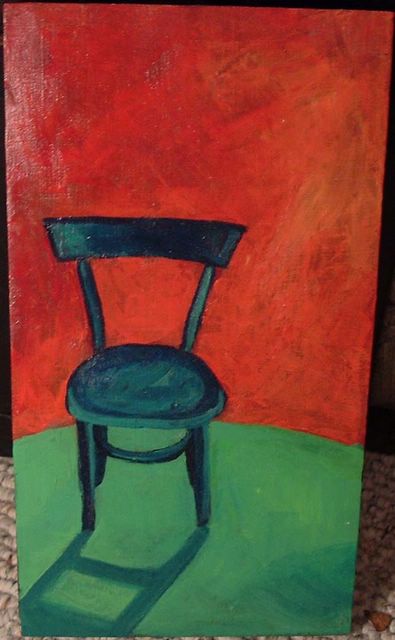
 A week ago, that very prospect seemed thrilling--my paintings would scoff at their judgement, cry "Who are you to label me? I am art," with an air of true feistiness, and I would say nothing, knowing that my art could defend itself. Hmm. How not like that "having an art show" has turned out to be. In fact, it's turned out to be not much of a big deal, either way. I haven't been fielding calls from art critics, who are heralding my work as "the next Van Gogh," nor have I been cowering under the bed as strangers storm my house, demanding to know why I ever thought such crap was art.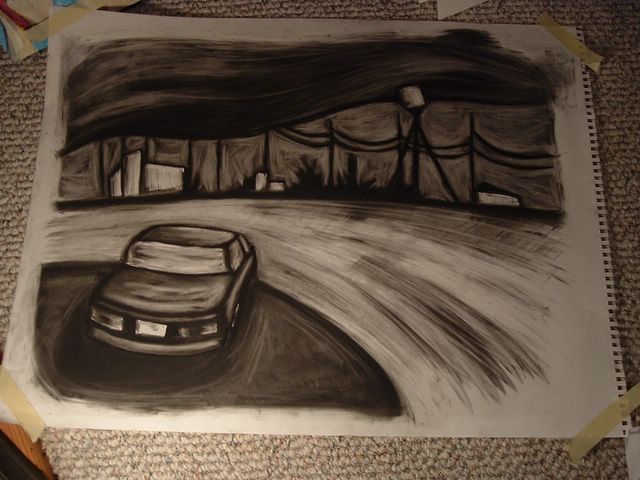
 Albom's sophomore effort is, as my brother would say, "scrumrulescent". I love books about heaven. Not that there are many, but still, I tip my hat to the author who even attempts it, and I fall flat on my face before the author who attempts it and succeeds. Premise to FIVE PEOPLE: Eddie's spent his whole life working at an amusement park, and when, in an attempt to save a little girl from almost certain demise (dun dun DUN), he's killed by a wayward coaster car, he finds himself in that much-imagined, much dreamt-of, highly idealized place--heaven. But there are no angels, no harps. Instead, there is only the first of five people that Eddie will encounter, who will explain to Eddie what his life has meant. Each of the five will teach Eddie a lesson.
 Oh, I have to say it, just to get it out there: "Wow, this book reminded me of The Lord of the Rings." Maybe that isn't fair. Maybe everything has strains of Tolkien now, what with The Rings' all-around excellency, and its perpetual popularity, but I don't think that's an excuse. Some of Paolini's scenes are fresh and thought-provoking, some downright dazzling (as I feel fantasy really should be--more on that later), but others bear the unmistakable scent of eau de Tolkien--I can't really say which, either, or I'd spoil the book for you.
 So, I confess, I didn't finish this book. Sad as it is, I made it a third of the way through, came to that realization that I didn't like any of the characters or find them interesting and didn't particularly care what happened to them--and so I put it down. This is always a tricky moment for me. I hate quitting books in the middle. I mean, what if it got interesting three pages after my stopping point? That thought can plague me for a long while, but, like I said, I quit caring what happened to Harry "Rabbit" Angstrom, really. He flirted with the idea of being lively and mysterious but settled instead for, well, annoying. A damn shame if you ask me.
On the bus today I overheard two girls talking. That's not unusual. In fact, what they were talking about wasn't unusual--'twas the same old Bellingham bitch (I've expounded upon it many times myself) of "Damn those developers! Leave our little hippie town alone!" But this girl had a further point to make: "At least I'm moving," she said. "I won't have to watch it go downhill anymore."
Hmm. I guess that sentiment's not unusual, either.
Like I said, I've ranted about this plenty myself, but I've lately had a change (a slight change, but a change nonetheless) of heart. I'll tell why, but first, a brief history for those of you unfamiliar with the plight of the growing urban area that is Bellingham:
It's gorgeous here, it really is, and I can't blame people for wanting to move to the Pacific Northwest. My parents moved here from the Midwest when I was a wee toddler and I've never left--graduated high school and college here, got married, etc. My mom confessed a year or so ago that, in looking for a place to move to, she wanted somewhere that we kids would find difficult to leave.
And Bellingham is difficult to leave, but it's not for lack of trying. Where could I go that would have the ocean, and the mountains, and the trees, and wouldn't be the East Coast?
So I've been here long enough to see the mall move in, to see the college (Western Washington University) expand, and (oh, horror) to see a vast expanse of housing developements attach themselves, mercilessly, to my beloved Bellingham.
I'm not the only one who likes it here, I'm learning.
Some magazine named B-ham a top spot for retirement, and so the retirees came. Also, there are the students, but that's nothing new. What's new is the sheer volume of students--Western's outgrowing it's hilltop and spreading down into Fairhaven. Brick-fronted condos are erupting all over downtown as out-of-town (even out-of-state) developers attempt to build "up, rather than out" (don't get me wrong--I'd rather see the city get tall rather than eat up the county and rub shoulders with Vancouver BC & Seattle). And--this is what really galls me--all these new people (who I'm sure are very nice--I even know several of them, right), all this demand for property and trees and pretty lakes, has pumped up the realty prices so high that it's becoming more and more unlikely that my student husband and I will ever be able to own property here. We might have to move simply because we cannot afford to stay in our hometown; we're not, after all, the target demographic. Shitty, right?
But. I think it's a shame that folks are packing up at the mere mention of the word "Starbucks." This girl wasn't concerned about some day purchasing a home (larger than, say, a dumpster) for under $400,000--nah, she was pissed because they just put a Starbucks downtown, along with some fancified condos. Now, I know I heard this little soundbite out of context, and maybe she has some very good reason for leaving, but I also know this is not an uncommon sentiment among a lot of kids who moved here for college, thinking they'd stay, but who are seeing the town morph into a great city-beast before their very eyes. And I know my position is a bit different from that of someone who moved here thinking that Bellingham would suit some liberal ideal, that everybody here is a Democrat and we all compost and grow our own pot and do arts & crafts on Saturdays as a group. We do have a bit of that stereotype, I know (and we do our share of living up to it), but honestly. I think people must actually move here expecting that or something like it, because you just cannot let a Starbucks chase you out of town.
After all, they're everywhere now.
I have more at stake here. For me to say that the Bellingham I love is buried under brick high-rises and developements with ridiculous names like "Trickle Creek" is tantamount to saying that the developers buried my history, too. My Bellingham is not gone; it's just changing. I can't pack up and leave just because my town is becoming a city. I say, someone's gotta stick around and buy coffee from the little guys, right?
 It just drives me nuts when scholars get all gung-ho about footnotes, and the guy who annotated my copy of DUBLINERS has what can only be termed a "footnote-fetish". Is it really necessary to break up a single sentence twice to explain first, what an altar is, and second, a chalice? And he felt it necessary to identify several street names as "a street in Dublin" when the title of the book is DUBLINERS. I should've known, I guess; my edition of the book is about 3 times the size of any other copy I've seen--and that makes perfect sense, given that it has a 30-page introduction, a section titled "Notes on Introduction", another titled "Notes on the Text", three separate appendices, and--finally--the dreaded Notes. I know footnotes are wonderfully helpful when properly used, and what I wouldn't give for a few in, say, Lolita, where Nabokov spouts out French without translation (oh, to have paid attention in high school!), but this "street in Dublin" business is a bit obsessive. There's a map in the front cover, for crying out loud. Anyway. Why don't I move away from the scholarly sidenotes, and tell you a bit about the book?
 For the longest time, I thought this book was an old school detective novel, like The Big Sleep or, I dunno, The Great Train Robbery (isn't that a movie?)--but I couldn't figure out what the hell a "gatsby" was. A gun, maybe.
 I have to say it. I'm sure your boss, your grandma, the barista at your favorite coffee-shop and your 8-year-old niece have all told you, but I have to say it: if you haven't read these books yet, you need to. Badly.
 Having read a couple of McEwan's other novels (Atonement and Enduring Love) and, having absolutely loved them, Booker-prize-winning AMSTERDAM came as a bit of a disappointment. Forty-pages into it, I still hadn't quite determined the relationship between the two main characters, Clive Linley and Vernon Halliday. Clive, a successful composer who is finishing a commissioned symphony to mark the end of the millenium, and Vernon, editor of the Judge, both loved Molly Lane, and meet in the very first scene at Molly's funeral.